Your cutting board is basically your kitchen MVP. It’s where all the chopping, slicing, and dicing happens—so it’s critical to pick the best type of cutting board for your task and treat it well.
Here, I break down the different types of cutting boards, how to choose the best cutting board for the job at hand, and care tips to keep your boards in kitchen-ready shape.
Best Types of Cutting Boards
You will find cutting boards made from various materials, with synthetic (plastic) and wood boards being the most popular. I am not a fan of plastic cutting boards, since microplastics can transfer to foods, and believe the best type of cutting board to use is wood.
Pass over glass, metal, granite, and stone boards—they are unstable, their surfaces are not secure for chopping, and they will dull your knives quickly.
Wood Cutting Boards
Wood cutting boards reign supreme and for good reason. Made of natural materials, wooden cutting boards are a beautiful fixture on your kitchen counter.
Wood has natural antibacterial properties, is sturdy and long lasting, has a smooth reliable surface for all your chopping needs. The surface resists scaring, absorbs very little moisture, and is easy on your knives. And if you get a wood board that has two functional sides, use them both.
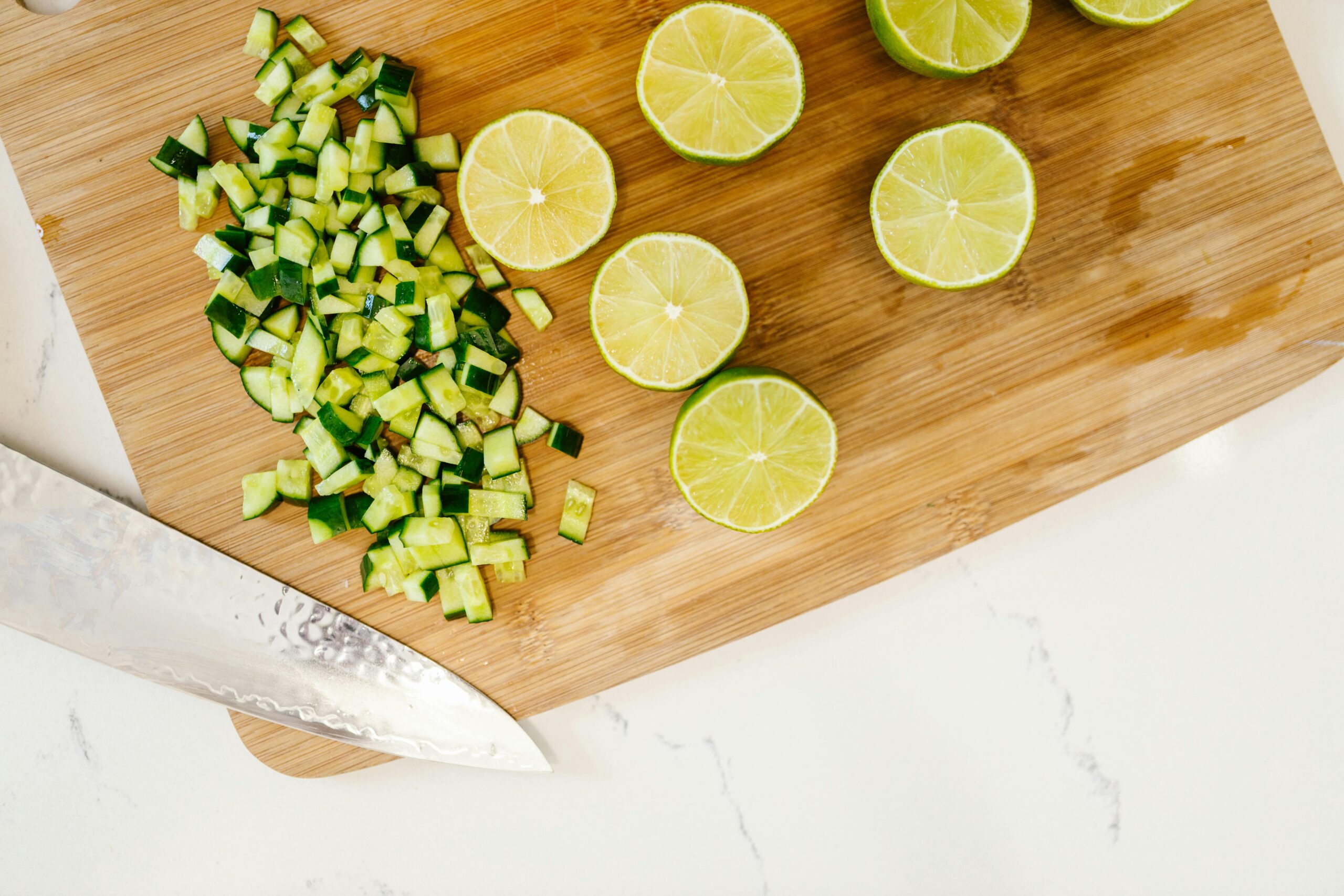
Do note that not all wood cutting boards are created equal: Some literature states that bamboo cutting boards should be avoided because the hard surface of this wood will prematurely dull your knives. Hardwoods like maple, walnut, and cherry are especially popular choices for cutting boards. They’re dense enough to resist deep knife grooves (which can harbor bacteria) yet gentle enough not to dull your blades.
How to Clean a Wooden Cutting Board
Knowing how to clean a wooden cutting board is essential, and the best way to care for your wood cutting board by cleaning it with mild soap and water, then dry thoroughly by hand and store upright to finish drying. Never leave your cutting board flat to dry, you run the risk of mildew forming on your board.
Never soak a wood cutting board in water or put it in the dishwasher. Sanitize wood cutting boards regularly by submerging them for 10 seconds in a bleach solution (1 gallon of water that contains 1 tablespoon of bleach) and drying them thoroughly.
Make sure you periodically (once every few months) treat the wood with food-grade mineral oil or cooking oil to keep your wood cutting board in optimum shape.
Non-Toxic Cutting Boards
Plastic boards contain toxins, which is why if you’re looking for non-toxic cutting boards, wood is the way to go. Unlike plastic cutting boards, which can leach harmful chemicals like BPA or phthalates—especially when cut or exposed to heat—wood is a natural, biodegradable material that’s both safer for your health and more sustainable for the environment.
Plus, when maintained properly, wood has natural antimicrobial properties that help resist bacteria, making it an ideal non-toxic cutting board surface for food prep.
In addition to their health and environmental benefits, wooden cutting boards bring a touch of warmth and beauty to your kitchen. They’re durable, easy to care for with regular oiling, and often last for years with proper maintenance.
Choosing a non-toxic cutting board isn’t just about safety—it’s about creating a kitchen space that supports mindful, health-conscious cooking habits. Your ingredients deserve a clean, chemical-free surface—and so do you.
Plastic Cutting Boards
Plastic cutting boards have been a popular choice in the past, but there are building concerns over its use, which is why I don’t recommend using them.
Proponents of plastic cutting boards prize them for their affordability and ability to be cleaned in the dishwasher.
However, scratches in the surface of the board can still hold bacteria. And with health and sustainability in mind, plastic and microplastics have become a serious concern—since plastic boards can give off microplastics during the cutting process that transfer to food.
Your safest bet is to avoid using plastic cutting boards entirely.
Best Practices for Cutting Boards
Have more than one cutting board! The FDA recommends using separate cutting boards for produce, raw meat, seafood and poultry.
Optimally, you should have 3 cutting boards: assign one for produce, one for raw proteins, and one for prepared food. With this simple, 3 cutting board solution, meal prep will be a breeze, giving you more time to safely create and enjoy your cooking!